



The headlines this summer have felt endless: cooling centers reaching capacity, power grids buckling, heat records broken across the country. We know living in New York City, it’s been tough with incredibly high humidity, flash floods, and soaring high temperatures. And waiting on a subway platform in the morning feels like an olympic sport. Over the past several years, extreme heat has quietly become the deadliest weather event in America, killing more people than hurricanes, floods, and tornadoes combined. In parts of Europe, this summer’s heat wave is more deadly than Covid was 6 years ago. We like to tell ourselves that heat is the great equalizer. Often weather is thought of that way. But we know really there are no great equalizers. Heat does not fall evenly, and nowhere is that clearer than in the lives of the people who grow our food, deliver our packages, and build our homes.
Workers Absorb the Danger
Farmworkers, construction crews, postal workers, roofers, and delivery drivers are disproportionately Latino and immigrant, and a significant share are undocumented or working on temporary visas. That status shapes everything about how heat risk lands on migrant and immigrant farmworkers. Workers who fear retaliation, job loss, or immigration enforcement are far less likely to report a missed water break or push back on an unsafe pace, even when they recognize the early signs of heat illness in themselves or a coworker. Piece-rate pay (where more work means more money), common in agriculture, adds its own pressure: workers are paid by the bucket or the row, not the hour, which quietly punishes anyone who stops to rest or drink water.
The science is quite clear that extreme temperatures are bad for human health. Andrew Dessler, climate scientist and author of Climate Brink says, “Outdoor workers will experience increased risk of short- and long-term health impacts. We also know that this reduces worker productivity, hurting businesses in turn. The hope is that our society will adapt and help workers out with water breaks, reducing exposure to mid-day sun and other fair practices. However, legislatures in TX and FL have actually prohibited cities from passing ordinances to protect workers. This is the opposite of what we need to do in the face of extreme heat.”
David Leathers, Climate & Extreme Weather Lead at Health Action Alliance says, “Extreme heat is the deadliest climate hazard for American workers, and the hardest to see. Fewer than 4% of employers have ever assessed their workforce’s vulnerability to climate risks, according to Marsh.” There is still no federal workplace heat standard in the United States. OSHA proposed one in August 2024, but the rule has stalled through more than a year of hearings and public comment, with no target date for finalization. In the meantime, the agency’s main tools are a heat inspection program that was recently extended and enforcement through the General Duty Clause, which analysts have described as a limited substitute for a comprehensive standard.
How States Hinder Progress
Where federal protection has failed, some cities tried to fill the gap, and some states moved to stop them. Texas passed a sweeping 2023 law, critics call it the “Death Star” bill, that preempted local ordinances in Austin and Dallas requiring water breaks for outdoor workers. Florida followed in 2024 with a law barring cities and counties from adopting their own workplace heat protections, killing a heat ordinance Miami-Dade County had been close to passing after farmworker deaths in Florida.
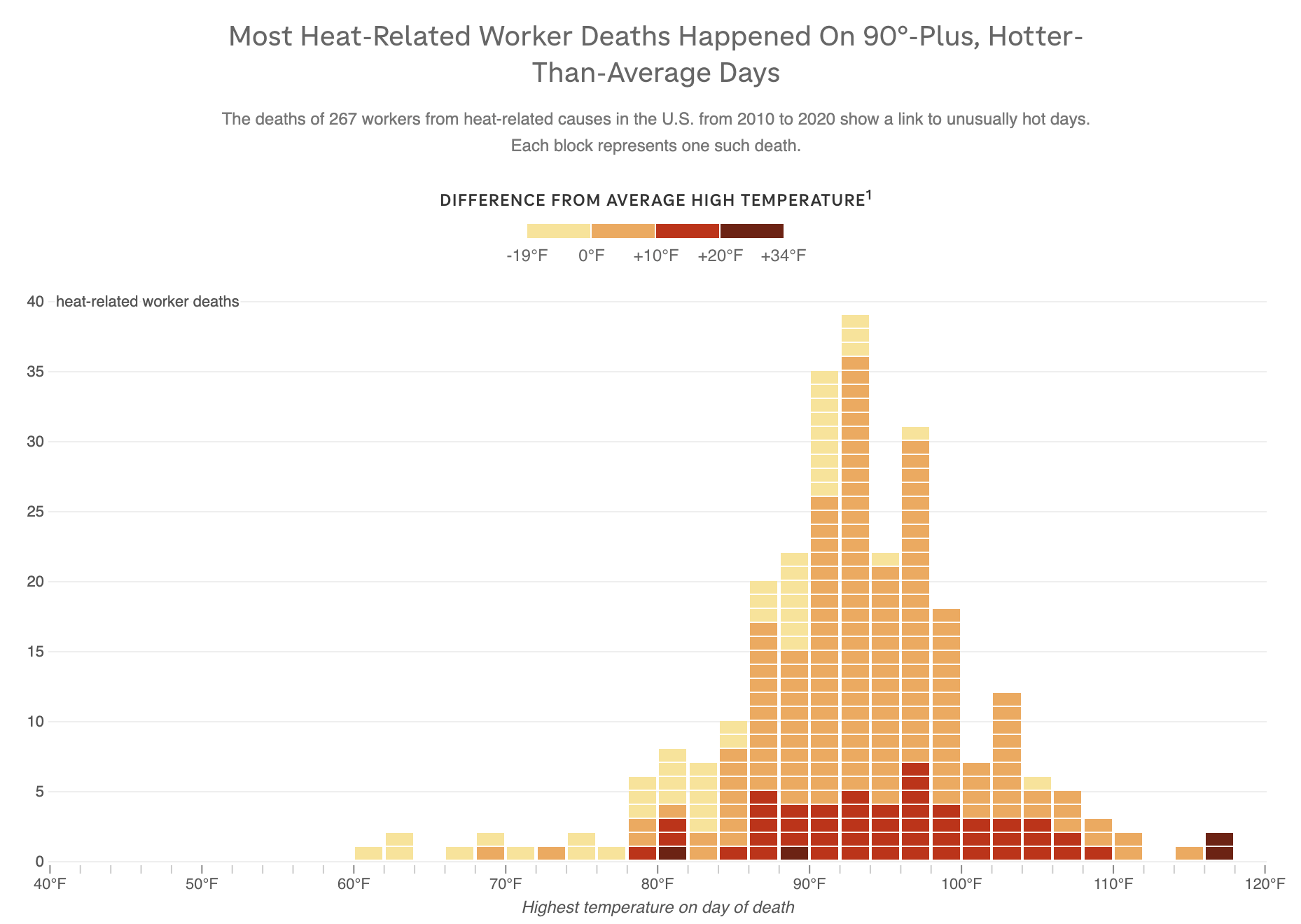
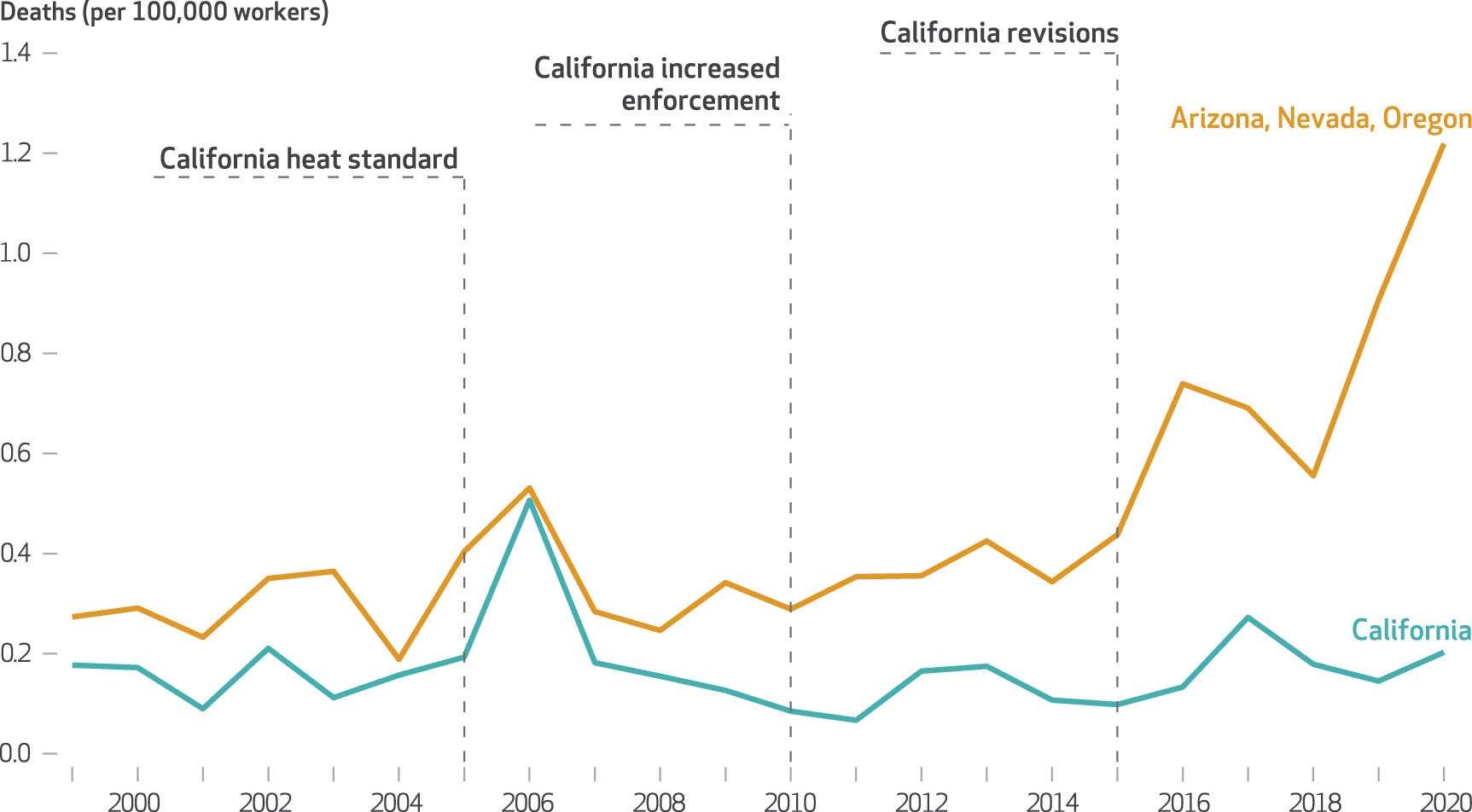
Researchers have warned that Florida’s law could disproportionately affect Hispanic and noncitizen immigrant workers, while labor policy observers note that worker heat protections have become a growing front in state preemption battles. Only a handful of states, including California, Washington, Oregon, Colorado, and Minnesota, have their own heat safety rules.
Amazon has become one of the worst offenders for heat risk to workers in the nation. At a fulfillment center in Suffolk, Virginia fans inside the building were not working for 3 months and ambulances were called almost weekly due to heat illnesses. The temperatures in the building were recorded as frequently above 85 degrees. One of the longest workers at the site, Jasmine Saunders said, “People pass out, and an ambulance comes, and nobody talks about it. It’s just normalized.” She contracted OHSA multiple times. “I don’t understand why it takes months to fix something so simple,” she said.
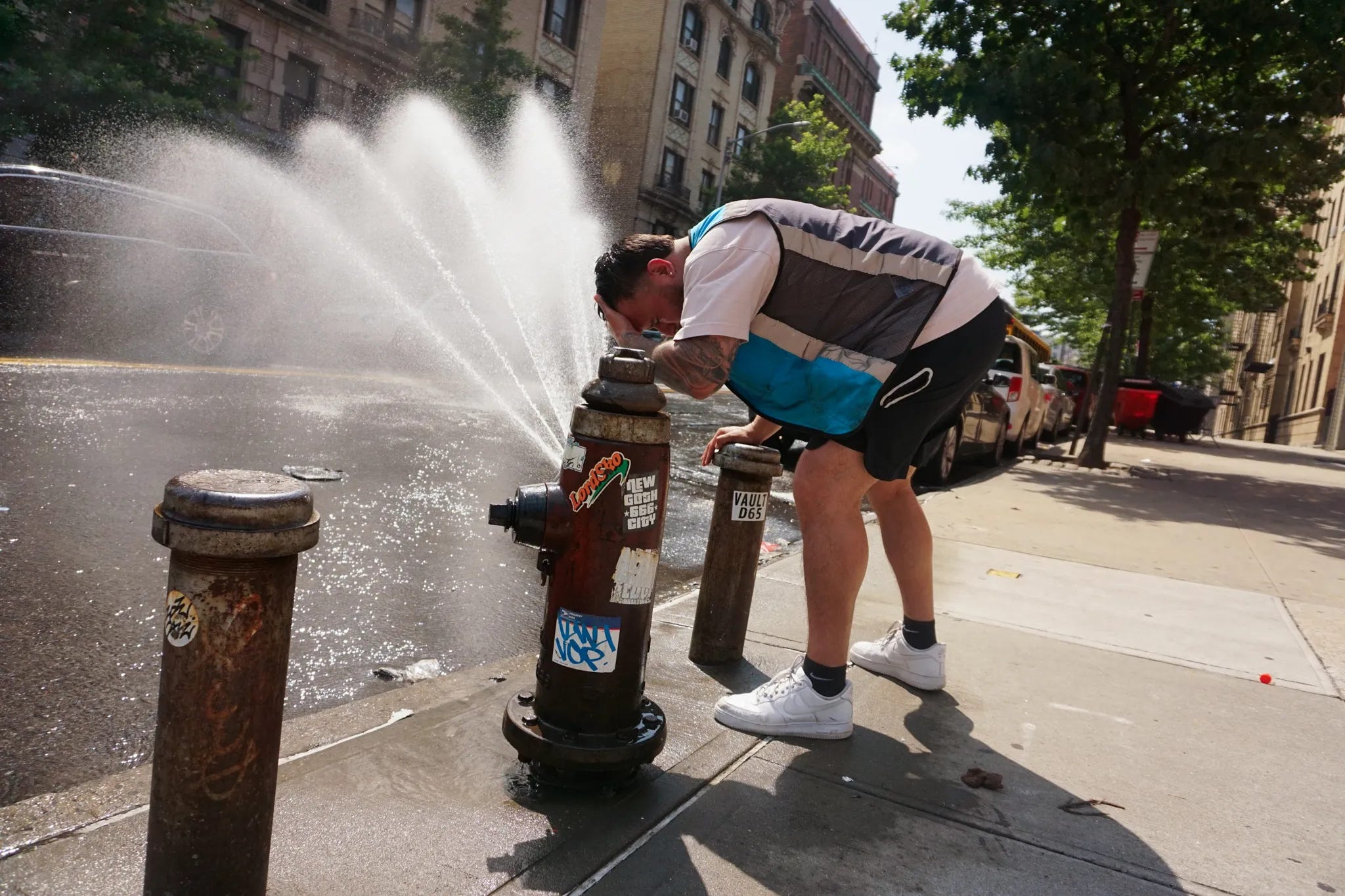
In the summer of 2019, Jeremy worked in an Amazon Fulfillment Center to try to see what life was like inside one of these behemoths. 3 years later, a man died due to heat exhaustion in the same building Jeremy was assigned to. The heat back then was overwhelming, especially for anyone working inside the trucks, which Jeremy often had to do when the lines got backed up.
Recently, we came across an agenda by the Federation of American Scientists that lays out possible steps policymakers can take to better protect our workers, with some really concrete actions. Over 150 organizations and governments, representing 40+ states. In addition, there’s a state explorer that shares what each state is doing around heat policy. This is top of mind in cities, states and among different companies looking for answers on how to address extreme heat.
What Workers are Doing in the Absence of Laws
Where legislatures have failed, workers have organized their way toward protection anyway. The Coalition of Immokalee Workers, a Florida farmworker group, pushed major buyers like Walmart and McDonald’s to source only from farms that meet worker-protection standards, including heat safety. The Coalition’s goal was to put pressure on the supply chain to make up for state level failures.
In Miami-Dade, organizations including WeCount led campaigns for local heat standards that many advocates led before the state preemption law took effect. Labor advocates and farmworker organizations have continued to argue that heat protections are a basic workplace necessity, while critics of Florida’s law warned that the ban arrived amid record-breaking temperatures and growing heat risks.
The Path Forward
Jeremy and Zoe are New Yorkers and can attest to this absurd heat. The subway platforms have the same level of humidity as the Amazon rain forest, but we have access to air conditioning all the time, mandated and provided by our employers. Instead of asking how hot it got this summer, we should be asking who is left unprotected. The answer so often depends on a immigration status, pay structure, zip code, or which state line someone happens to live south of.
The reality is that extreme heat is increasingly exposing deeper inequalities across American society, from housing and infrastructure to labor protections and public health, a trend documented by both The Guardian and public health leaders alike.
Employers can recognize heat as a safety issue, assess exposure, establish heat action plans now, and of course, when it’s not safe for the employees, the work needs to be stopped.
Climate scientists warn that what feels like an anomaly today will soon be unremarkable. Dessler puts it:
“Extreme heat is now a common feature of summer. While not every summer will be record breaking, enough will be that a record-breaking summer is going to become a normal occurrence. And, in a few decades, the 2020s will look like average summers. A few decades later, the 2020s will look downright cool. So enjoy it while it lasts.”
However brutal these days feel now, they are now the new baseline that we are rising above, not a new peak we’re moving away from.
Interesting on the web
In Massachusetts, White families have a median net wealth of $549,000. For Black families, it is just $7,800 - LINK
Arizona has unenrolled 180,000 children from SNAP and statement enrollment overall is down 50% due to harsh cutbacks - LINK
An affordability dashboard showing the true picture of how bleak things have gotten, from Mike Konczal - LINK
I’ve never seen a better density of the perfect charts showing how challenging it has become to rise up the economic ladder and why we are more and more obsessed with money, from kyla scanlon - LINK
I had two Substack Lives: One with G. Elliott Morris to discuss what we’re missing on public opinion polling and another with David Pakman to explore the politics of an unfair economy - Elliot, David
Books We’re Reading
Man in the Mirror, by Anand Giridharadas. In 2023, the lives of two men—Jordan Neely, a homeless man and Daniel Penny, an ex-Marine—collided tragically in a New York subway car. In this book, Anand renders this deadly encounter and its aftermath as a propulsive crime story that opens onto a larger human drama of belonging, homelessness, and hardship. LINK
A Thing with Feathers, by Jim Abbott. Behind the sometimes grim inequality statistics are individual people faced with a choice between hope and despair. Jim’s book is a propulsive novel about the roads that individuals so often must take to overcome the odds. LINK
*****
If you think your book aligns with this work and our audience, submit this form and we’ll share it with 25,000 people.
I appreciate how this post supports with data another important issue relating to workers' rights. It shows the widening in one of the many gaps in our society, all of which tear us apart as a country while our administration attends to privileged pursuits rather than the common good.
Thank you for this amazing topic. I really think it’s the first time I read this perspective of such a relevant discussion.